
Joel Storm (Madison)

Building Music Cities That Last
Photo of Madison, Indiana
Editor's Note:
Independent venues and music scenes don’t just happen by accident. They are rooted in local culture, real people showing up, and the often-invisible structures that allow artists and audiences to meet in meaningful ways.
As part of our ongoing series, the Indiana Music Alliance is inviting leaders across Indiana’s music industry to share candid reflections on what they are seeing on the ground. What’s working. What’s not. And what it will take to build sustainable ecosystems that support musicians, venues, and the communities that love live music.
In this installment, we spotlight Madison, Indiana — a small river city of about 12,000 people and the largest city along the Ohio River between Louisville and Cincinnati — often celebrated as Indiana’s Music City for its high density of venues and vibrant cultural scene.
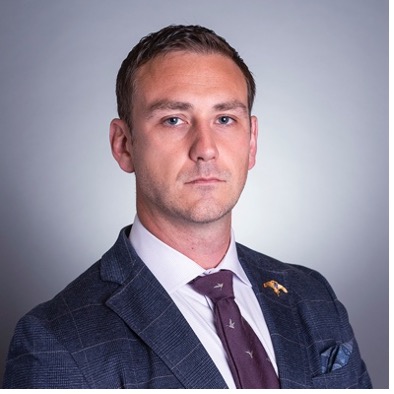
Joel Storm is a longtime Madison resident, musician, and civic leader who serves on the Madison City Council and Plan Commission. He is also the founder of the Indiana Music Hall of Fame and Ohio Valley Sound, two initiatives focused on honoring musical legacy while actively building pathways for education, production, and economic sustainability.
Drawing on his experience leaving Madison due to a lack of viable music economy and later returning to help build the infrastructure he once needed, Joel offers a grounded, first-person perspective on what it takes to grow and sustain a music ecosystem in a smaller market like Madison.
A Music City in Progress
Words by Joel Storm
Plenty of Rooms, Steady Demand
Madison has one of the highest venue counts per capita in the state. That variety is a real asset, even if it can feel overwhelming at times. The most encouraging thing I’ve seen over the past year is that the appetite for music and the arts in Madison is still very strong.
I can see that both anecdotally and analytically. We use Placer.ai data in the city to understand who’s coming from where and to make educated guesses about what our investment infrastructure looks like. Then you go to a couple of venues on any given night. You see people showing up. You see festivals doing well. You see more people wanting to saddle up and make an investment to host festivals and events.
Between the data, the turnout, and the city’s interest in developing a riverfront amphitheater in one of our premier downtown locations, there’s a strong case that demand is real and growing.
The Circular Problem: Talent and Stages
At the same time, Madison faces a circular problem that a lot of smaller markets run into. Venue diversity and talent availability are tied together, and it’s hard to move one without the other.
Right now, the good players are getting older and still playing, but there’s an off-balance ratio of existing players to incoming players. If you have 20 older musicians continuing to play, but only three younger musicians entering the scene every few years, you’re not going to get that 20 in five years.
What I’ve seen in Madison historically is that we’ll have these moments in time where things become eclectic and exciting. A year, three years, whatever it is. Then it falls off, and you rebuild from scratch. Without continuity, you’re always starting over.
Breaking that cycle requires organizers to take real financial risks and personal investments to incubate new genres and new talent before there’s a guaranteed audience.
Infrastructure That Has Momentum
We do have momentum. Venues like Red Bicycle Hall have become premier spaces for one-offs. Places like Mad Paddle are doing good work as hybrid bar, restaurant, and performance spaces. There’s also private investment happening around the Ohio Theatre, a historic venue with a lot of potential.
On the public side, I’m proud of the festivals and campaigns that have helped move the needle on both our physical and cultural infrastructure. The inaugural Unbroken Circle festival brought high-caliber roots and Americana talent to our riverfront, and the Madison Riverfront Amphitheater project represents a long-term investment in our town.
At some point, though, there has to be the infrastructure to actually live up to the name “Indiana’s Music City.” We’ve seen musicians show up because of that name. Now it’s time to make sure that when they pack their things up and come here, we’re fulfilling that promise.
Why Collective Work Matters
In a town like Madison, collective engagement isn’t optional. It’s essential.
When people ask why more musicians aren’t showing up to meetings, organizations, or decision points, I don’t see a lack of desire. Life gets in the way. What’s missing is organization around a mission that aligns with musicians’ expertise and interests.
We have groups like the Madison Arts Alliance, the Madison Music Movement (M3), Visit Madison, and the Board of Tourism all working in parallel. The city has partnered with these organizations to provide funding, marketing support, and help facilitate festivals, allowing M3 to act as a discretionary provider of resources.
We’re making it real here, slowly but surely, and quicker every time. A few of us are building something organic and grassroots, and it’s starting to take shape.
Retention Requires Real Economics
Talent retention depends on whether a community can support artists economically, not just culturally.
I grew up a musician here. I went into the Marine Corps for a bit and played and was able to make money. But I left Madison because there was no real economy. A lot has changed in the 20 years since I’ve been gone, but that reality still matters.
Music has been commoditized in ways that make it difficult to build a career in smaller towns. While we all play for the love of it, love alone doesn’t pay rent or build a future. Right now, our focus is on organizational development and on creating a collective of musicians who can turn passion into sustainability rather than a permanent side hustle.
Education is a huge part of that. Madison Consolidated Schools started a studio at the middle school level, and that’s a smart foundation. Starting with youth gives you continuity. Children are our biggest investment. We want them to grow up here, leave if they need to, and then come back because this town offers a real quality of life and creative opportunity.
Toward a Regional Sound Along the Ohio
I believe we’re on the edge of something bigger than Madison alone.
We’re working toward organizing a collective of disciplined communities along the Ohio River. Through the Indiana Music Hall of Fame and Ohio Valley Sound, we’re trying to honor, educate, and inspire while capturing a regional identity rooted in shared history and lived experience.
We’re also developing a studio. One of the musicians who moved here a few years ago is a world-class studio artist, and we’re just doing it. We’re not waiting for a perfect plan or a 100 percent solution. We’re building an 80 percent solution and making it better every day.
That’s what excites me. We can dream big without getting overwhelmed by the future. We can make things real, now.
One Clear Action
If you listen to music, you’re already part of this ecosystem. We listen to music more than we eat, and for some of us, more than we talk. Even the smallest investment becomes monumental in the aggregate.
One of the hardest parts of this work is convincing yourself it’s exciting. Believing it, telling others it’s exciting, and then waking up the next day and finding that energy again. That’s why surrounding yourself with other honest, action-oriented people matters. You fill each other’s cup, and you move together.
When you feel tired or uncertain, keep going. The road to success is narrow and rugged, and the road to failure isn’t much easier. Resilience lives in community. Stay the course. Keep building. Keep showing up.

