
Inside the IU Bloomington AlgoRhythms Summit
Words by Avery Martin
What if one of the most iconic songs ever written wasn’t written by a person at all? If your favorite song had been created with AI, and it turned out exactly the same, would it feel any less powerful? If it still moved you, would it feel less meaningful?
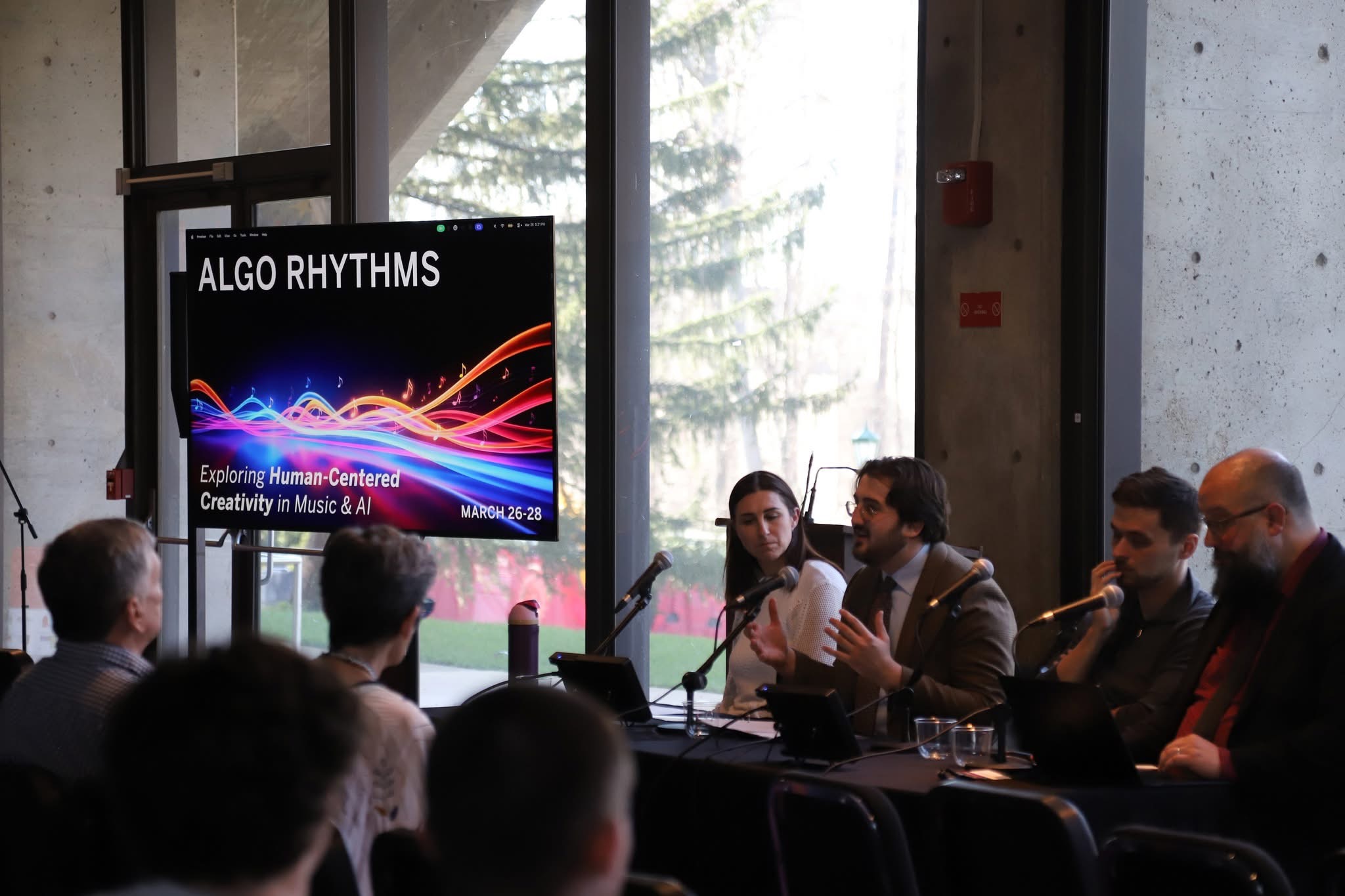
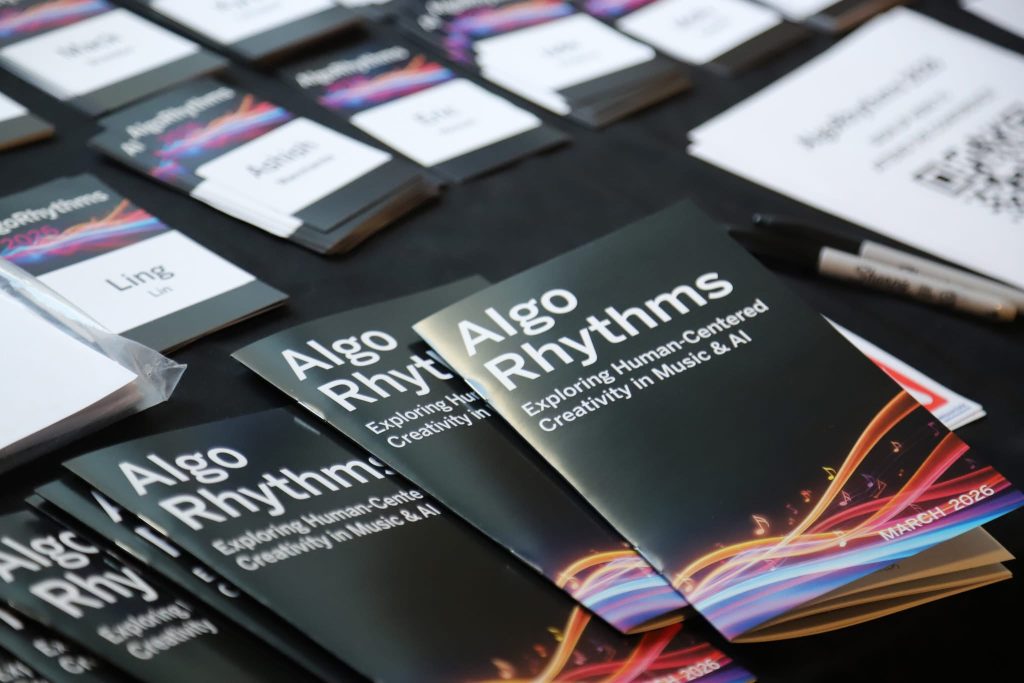
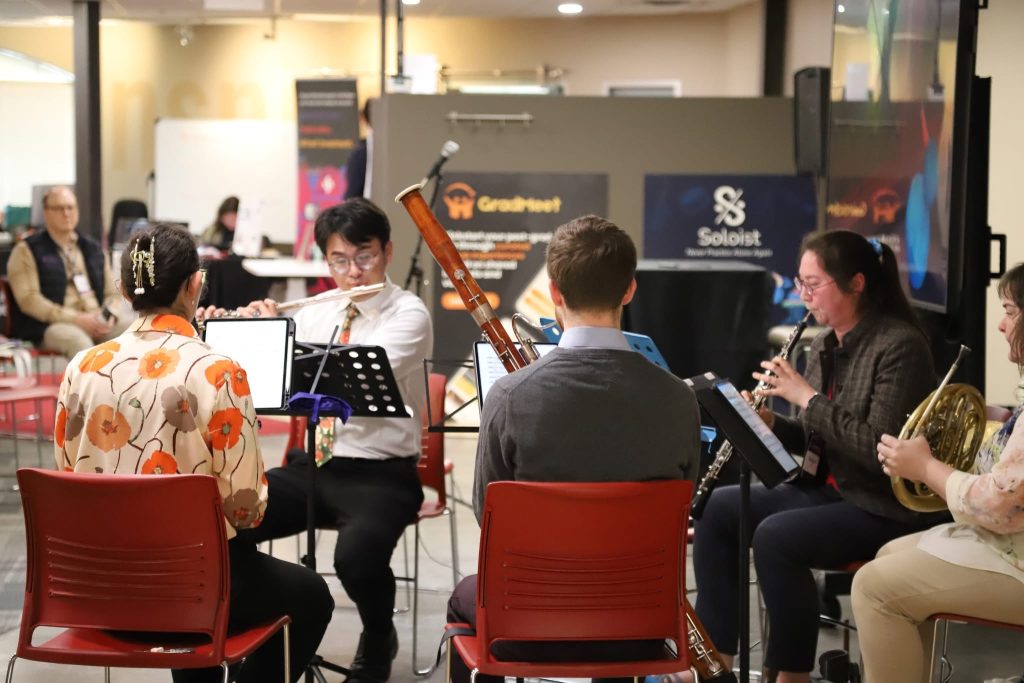
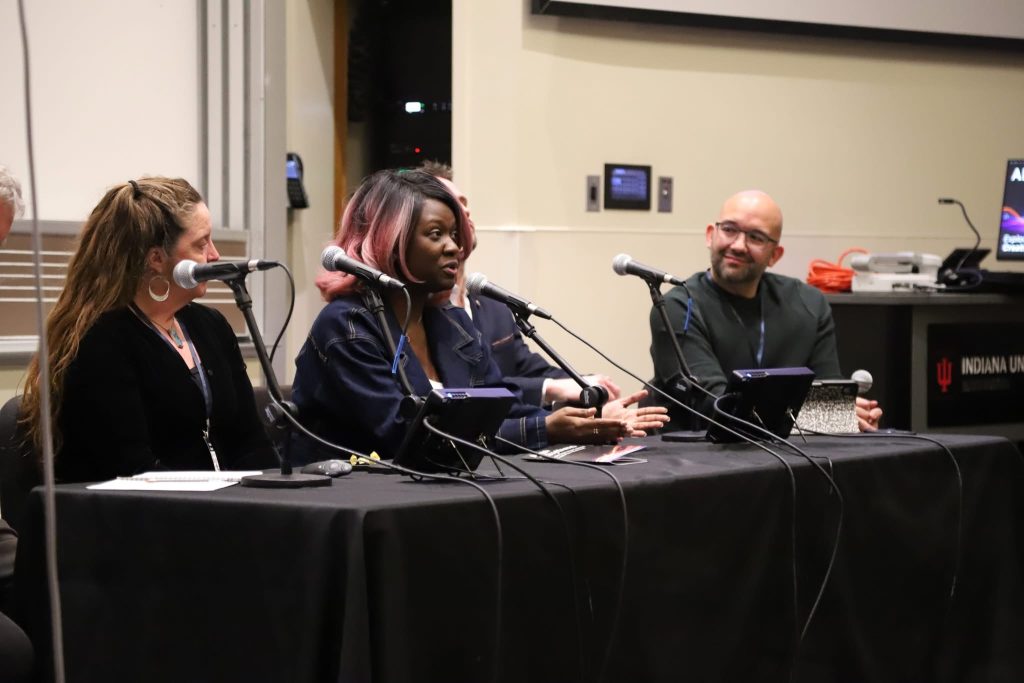
Those were the kinds of questions at the center of this past week’s conversations, as we joined the Indiana University Jacobs School of Music, Maurer School of Law, and others for their annual AlgoRhythms Summit. Through a mix of panel discussions and presentations from industry professionals, the event sparked thoughtful dialogue about AI’s growing role in shaping the future of music.
Summit Recap
Discussions touched on both the risks and the possibilities. Some expressed concerns about artist rights and creative ownership, while others argued ways AI could expand access and strengthen protections and compensation for musicians.
Thursday centered on the legal landscape and evolving policies around AI in music. Scholars, entrepreneurs, and musicians explored philosophical questions about human creativity, emphasizing the need to “do no harm,” understand impact, prioritize transparency, and better navigate intellectual property rights.
While acknowledging the legal gray areas surrounding AI, speakers also pointed to a critical opportunity: to shape policy and frameworks now before the technology outpaces the law and creates more complicated challenges.
Friday shifted toward innovation, spotlighting companies pushing the boundaries of music creation and performance. Platforms like Songhub, PetsAloud, Moises, and LANDR demonstrated how AI is already making a tangible difference in artists’ workflows and creative processes.
Many of these companies also addressed concerns around artist compensation for work used in training AI, emphasizing transparency and fair use. They highlighted that much of their technology is not rooted in generative AI, but instead built on tools designed to support and enhance, not replace, human creativity.
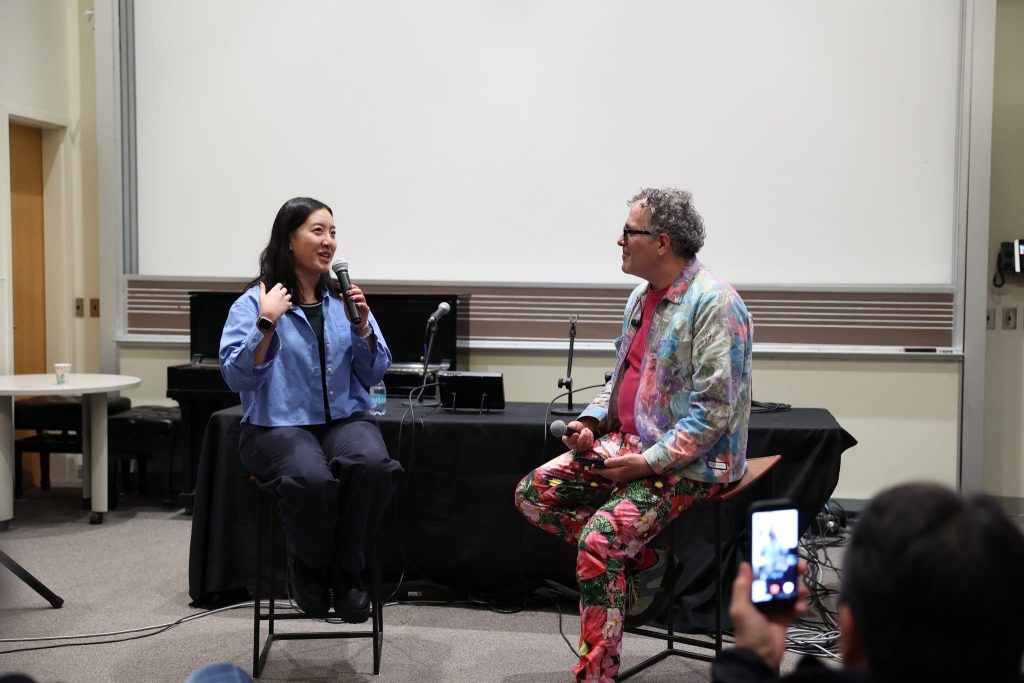
By Saturday, the summit brought together returning speakers and new voices to dig deeper into AI as a creative tool. Conversations highlighted why some artists are embracing these technologies, while also acknowledging the disruption they introduce to traditional ideas of authorship. Ultimately leaving us to consider whether AI is opening the door to a more democratized music industry, or reshaping what it means to create in the first place.
What’s Next?
A clear trend among the speakers, whether they were sharing ideas, building businesses, or offering perspectives, was a genuine connection to music. Most were artists themselves, while others were deeply invested in the industry’s future; some of them were IU alumni themselves. Either way, it was clear that everyone in the room shared a common goal: to see the music industry adapt to changes in the tech industry and find ways to thrive in that environment.
Our visit to Bloomington gave us a firsthand look at the energy building in the region. The READI 2.0 Arts and Culture Study highlights the Indiana Uplands as a key driver of the state’s future, emphasizing the role of arts and culture in regional growth.
One of the study’s central goals is to boost economic vitality by investing in the area’s unique cultural, artistic, and community assets. We are excited to see that vision take shape through increased support for gathering spaces and arts and cultural events across the region.
Learn more
If you are interested in learning more about how technology is shaping the music industry, one of the platforms featured at AlgoRhythms, Music Tectonics, hosts a music tech conference in Los Angeles this October.
If you can’t make it, we recommend checking out another speaker from the summit, Marcus Lawrence from Zinstrel, and his newsletter, talking all about AI and the music industry.

