
Alain Barker on AI, Authorship, Creative Migration, and Why the Future of Music Won’t Be Decided in Silos
Words by Polina Osherov; Photos provided by AlgoRhythms
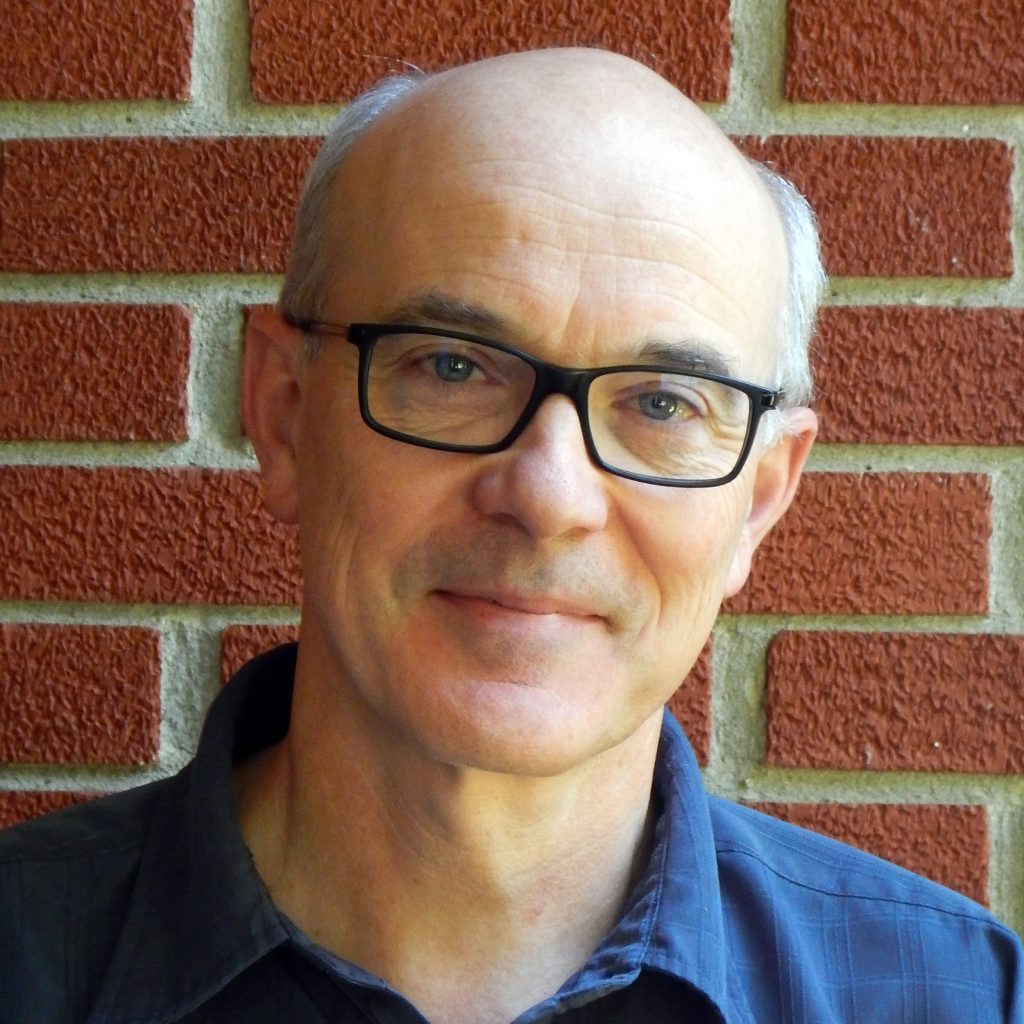
Alain Barker is a faculty leader at the Indiana University Jacobs School of Music, working at the intersection of music, innovation, and the future of creative practice. At a moment when artificial intelligence is rapidly reshaping how music is created, distributed, and monetized, Barker is helping position Indiana University as an unlikely but important convener in the conversation.
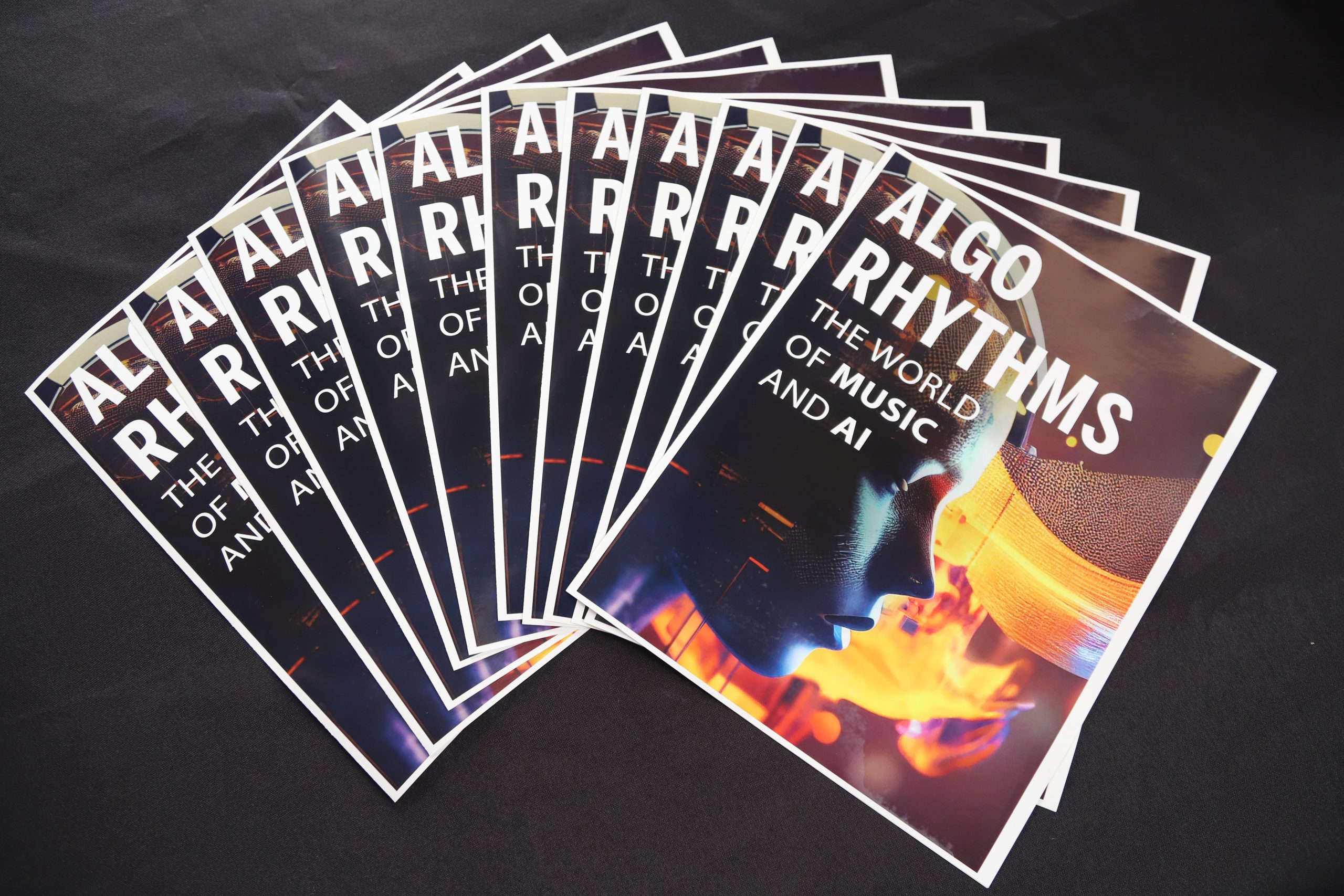
He is a driving force behind AlgoRhythms 2026, a cross-disciplinary summit that brings together artists, technologists, legal scholars, and industry leaders to wrestle with some of the most pressing questions facing music today: authorship, ownership, authenticity, environmental impact, and business transformation in an AI-driven world. In partnership with the Indiana University Maurer School of Law and IU’s broader innovation ecosystem, the conference reflects Barker’s belief that the future of music can’t be understood in isolation from law, technology, and economics.
At its core, his work circles a deceptively simple question: as machines become more capable, what remains uniquely human in music?
PO: What felt urgent for you about AI and music that you wanted to convene AlgoRhythms?
AB: So this happened… the origin story was three years ago. I went—Dmitri Vietze from Rock Paper Scissors is a good friend—and I noticed that Rock Paper Scissors, through the pandemic, pivoted much more into tech and music. They developed this Music Tectonics conference in Santa Monica, California.
After three or four years, I felt that from my vantage point in higher education, research, and creative activity at Indiana University, I was getting a good sense of what was happening in the world—but I also felt out of touch with a certain conversation. Even though I come from the legacy classical world, horizons are expanding. There’s a lot more mixing and matching with disciplines and technology.
So I went to the conference, and I was completely blown away. It was one of those formative experiences where I realized that the music technology world, writ large, was being extremely forward-looking and creative and innovative in ways that we didn’t understand.
And I felt that there were shortcomings from both sides. Technologists get enamored with their own technology and believe that this is ultimately valuable to the world. At the same time, the mindset of creatives in higher education didn’t necessarily link with that.
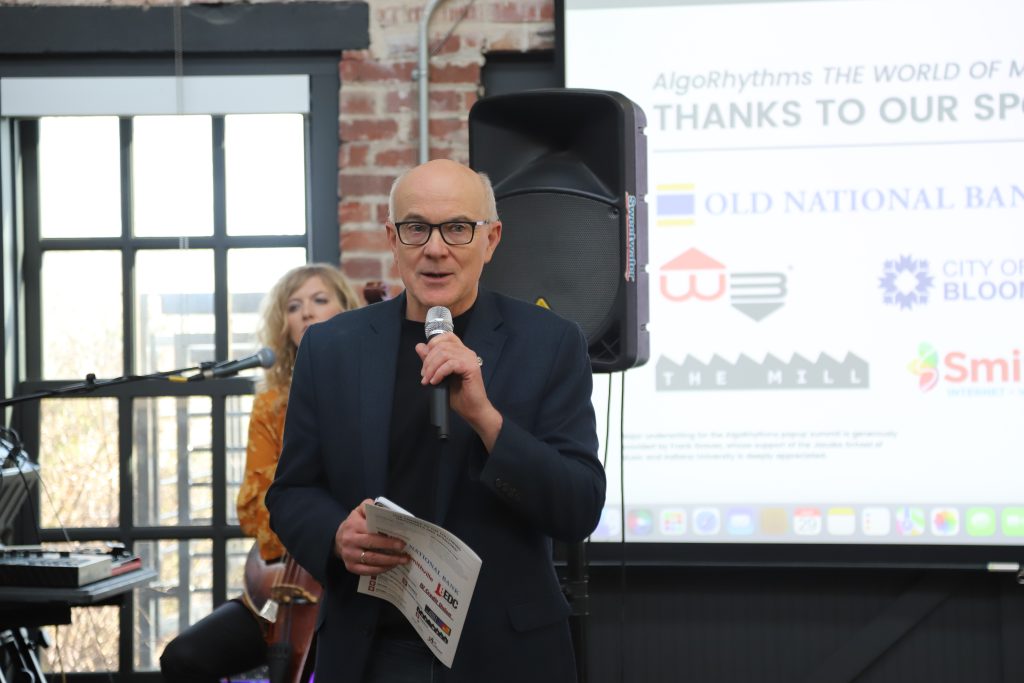
So I thought this might be an opportunity to bring those worlds together. That’s essentially what AlgoRhythms is—a meeting place between the tech world and higher education, research, and creative practice. And that doesn’t normally happen. Everybody stays in their lane.
PO: Are you seeing AI already affecting musicians and music businesses in Indiana, or is this still more of a coastal phenomenon?
AB: I see it happening as AI as an assistant rather than AI as a replacement.
I know a lot of artists are using AI in various ways to assist or propel what they’re trying to do—to turbocharge their creativity. But I think the idea that generative AI will replace art is mistaken. I don’t believe that’s going to happen.
There’s this AI slop that’s flooding the market that people are extremely concerned about, and a lot of artists are very resistant to it. But I haven’t yet seen anybody pick up on generative AI as a replacement for meaningful artistic exchange.
What I have seen is efficiency in action, acceleration of creativity, expansion of opportunity, migration into different spaces. But not a replacement of meaningful content.
We’re at the beginning of a voyage. I’m not sure where we’re going to end up, but I have not seen artists wanting to go into a place where their art is replicated by AI.
PO: You mentioned “creative migration.” Can you expand on that?
AB: One of the phenomena of this emergence of technology is what I’m calling creative migration.
Composers are becoming filmmakers, filmmakers are becoming music producers, people are moving into gaming—everyone’s mixing and matching and moving into different spaces. And sometimes people move into those spaces in a way that creates a whole new life for themselves, a whole new version of themselves.
That’s happening all around us. We’re going to have a panel discussion about that, because I think it’s a really important shift.
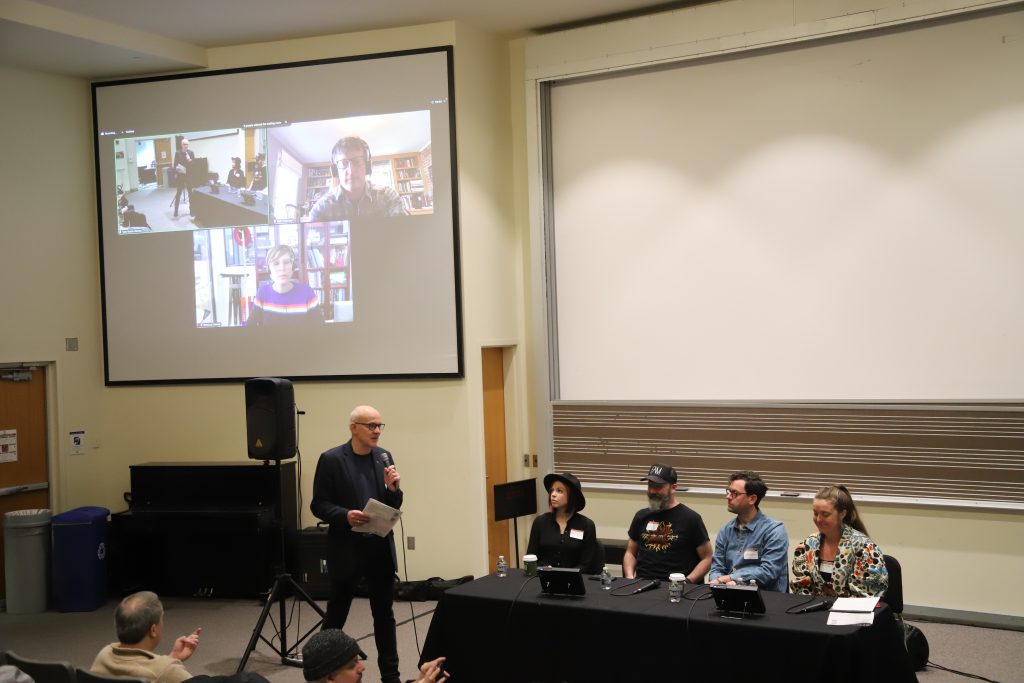
PO: Let’s talk about authorship and ownership. What are the realistic legal flashpoints coming in the next few years?
AB: I’m not an expert, so I hesitate a bit, but there are clearly two camps emerging.
One camp believes we should use the structures of the past, legal frameworks from the 20th century around recorded sound, intellectual property, ownership, and try to maintain control within those systems.
The other camp says we’re in a completely new landscape with no maps. That we need to rethink value creation entirely, and that this will fundamentally shift how we think about intellectual property and ownership.
It’s probably going to be some mixture of the two.
There’s also this tension around whether AI-generated content is akin to public domain, since it’s drawing from existing material, or whether that comparison breaks down entirely. Some argue it’s just remixing what’s already out there. Others say that’s fundamentally different from anything we’ve seen before.
So there’s real tension in how this will unfold.
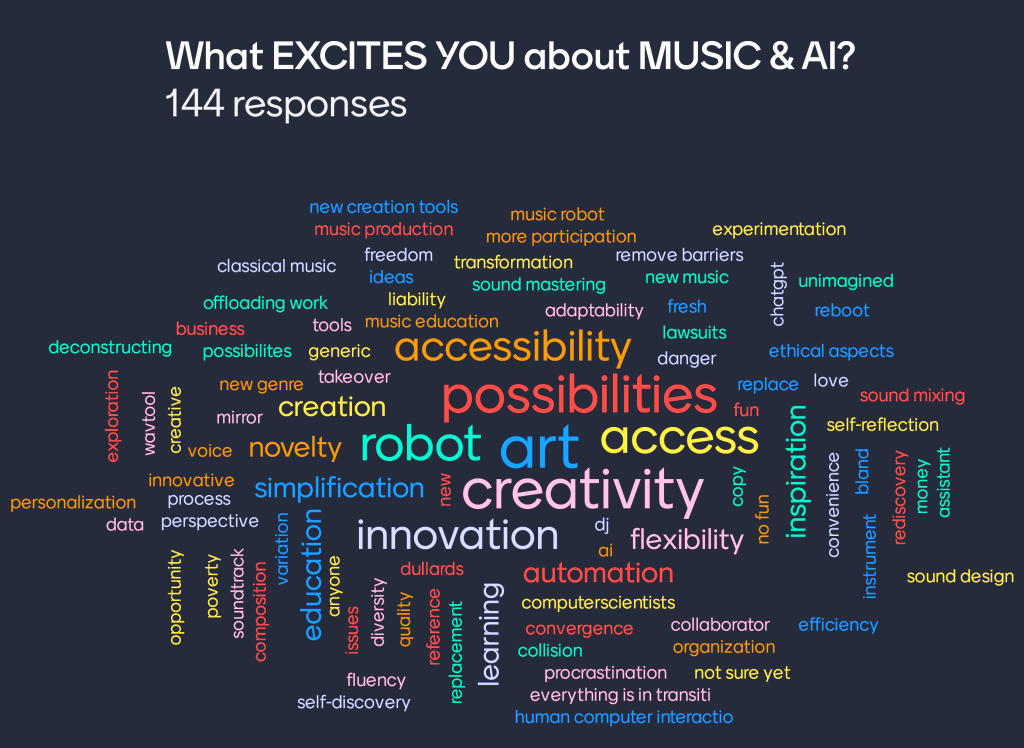
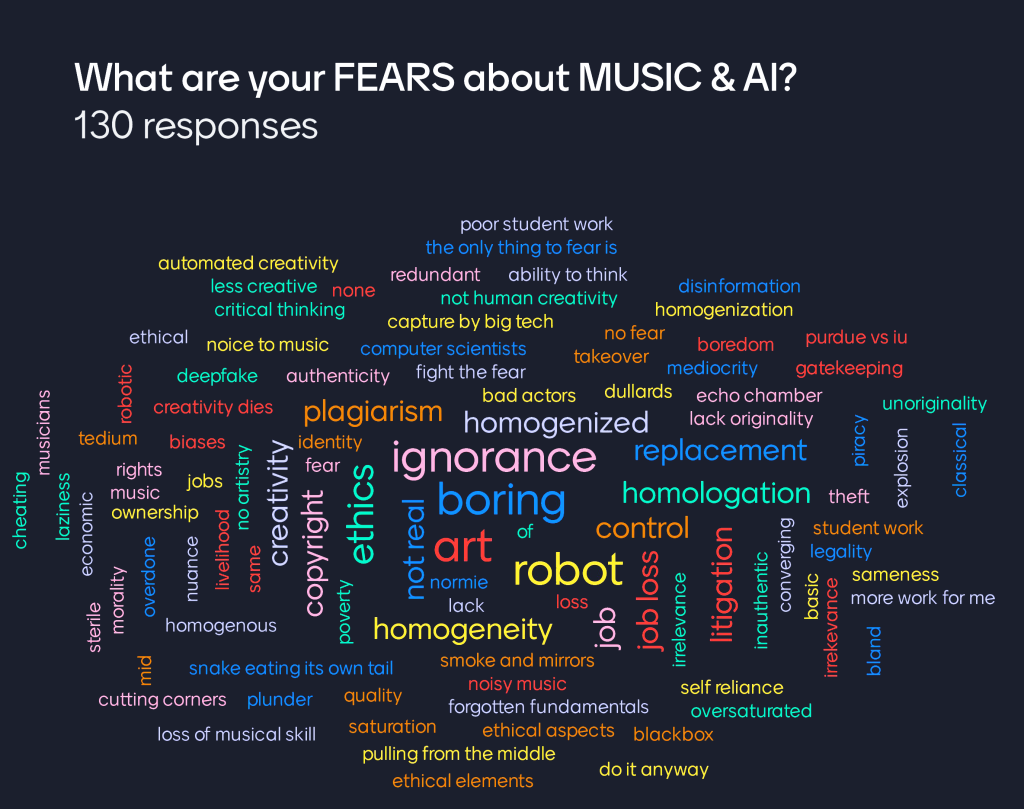
PO: Does this ultimately come down to money—how artists get paid?
AB: It has to do with money, but it also has to do with traditions of practice.
Everything we do in the art world is based on traditions, culturally, technologically, financially. There’s a relationship between all these elements that results in something like: I’m a musician on stage, playing my music, and this is the financial framework that sustains me.
Technological shifts have always disrupted that. Synthesized sound, for instance, revolutionized music. Some orchestral jobs disappeared, but entirely new aesthetics and opportunities emerged.
So it’s always a mixture. What’s different now is the speed. Things are moving so fast that we don’t know where we’re going to end up and that’s why people are trying to put the brakes on.
PO: What about environmental impact? AI is incredibly resource-intensive. How should the music industry think about that?
AB: I’m very concerned. Personally, I think sustainability and the environment is one of the most important issues we face.
At the same time, this emerging creative environment enabled by AI is part of the reality we’re in. We have to navigate it with our eyes open rather than turning away from it.
I respect artists who say, “I don’t want to engage with this because it conflicts with my values.” That’s completely valid. But then we also have to look at all the other ways we participate in systems that impact the environment.
It’s a mixed bag.
What I will say is that millions, billions of creatives are going to use these tools. And I think in 10 or 15 years, what emerges could be absolutely spectacular. So we need to take time to seriously look at those opportunities, even while holding the tension around environmental impact.
PO: What does smart leadership look like at the state or regional level when it comes to music and AI?
AB: This connects to a broader issue in Indiana—workforce development.
One of the unintended consequences of that conversation is that the arts are being relegated to something secondary or irrelevant. And I think that’s a mistake.
The entrepreneurial mindset of the musician, the artist, that is a significant power boost for how we think about economic development. By dismissing that, we’re inadvertently shooting ourselves in the foot.
We’re missing a huge opportunity to integrate creativity, entrepreneurship, and emerging technology.
Putting resources into the emergent creative class—especially where it connects to technology—is exactly what we should be doing.
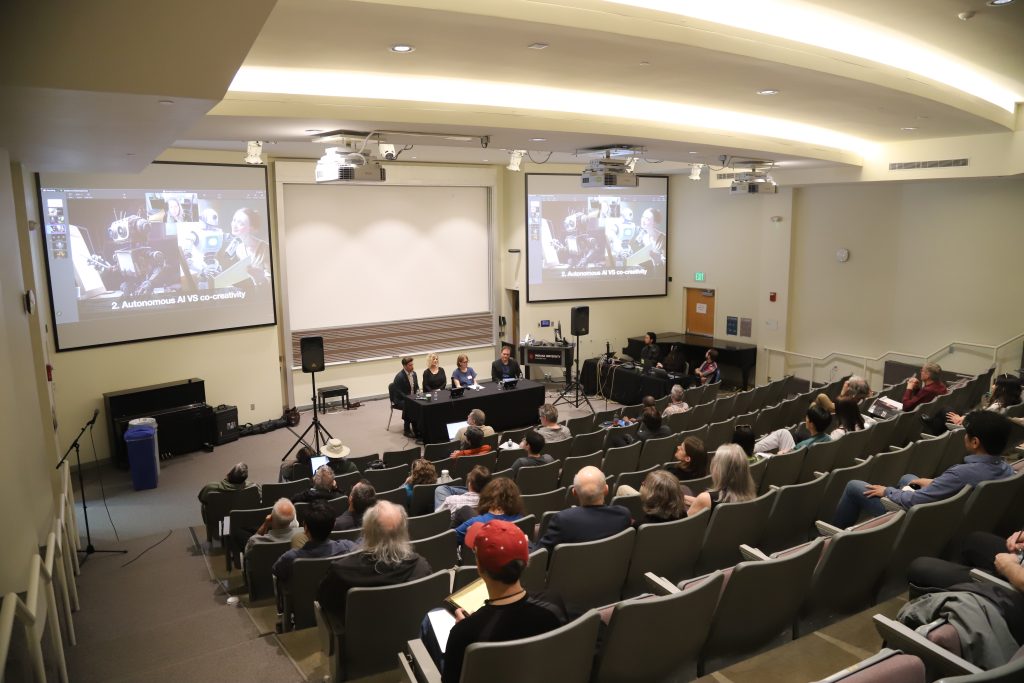
PO: One of the challenges is explaining that value in terms that policymakers understand.
AB: Right. And this is where I think artists have some accountability.
Artists are often fixated on their personal journey, which is powerful and necessary, but the conversion of that personal journey into value creation is not something artists tend to think about or articulate.
As long as we stay in that space and expect the intrinsic value of what we do to be recognized, we’re in a cul-de-sac.
I think as a community, we need to get better at understanding and expressing how creative work translates into broader value.
PO: If someone could only engage with one part of AlgoRhythms, where should they focus?
AB: It really depends on their interests.
If you’re concerned about legal issues, ownership, monetization, you should attend the Maurer School of Law panels on Thursday.
If you’re interested in business and innovation, the Saturday morning panels focus on the business of music. The afternoon panels focus on creativity.
And if you’re deeply skeptical of AI, you should absolutely attend the Thursday 4:00 p.m. panel. We’ve invited Adam Neely, who offers a very articulate critique of the entire AI space.
There’s something in the conference for every perspective.
PO: What will remain uniquely human in music?
AB: I have to believe that the people who make it are innately human and that won’t go away.
No technology has ever replaced human creativity. When the piano replaced the harpsichord, when recorded sound emerged, human expression didn’t disappear.
Recorded sound only had value because it created meaningful human connection.
And I think the same is true with AI. Human beings will always find ways to communicate meaningfully and soulfully with each other. That’s not going to go away.
PO: Anything else you want to make sure people understand?
AB: This is a unique collection of individuals coming to Bloomington.
It’s a rare opportunity to have artists, technologists, legal thinkers, and industry leaders all in one place, really grappling with these questions together.

