
Art, AI, and the Fight for Human Value
Words by Avery Martin; Photos provided by AlgoRhythms
Artificial Intelligence is everywhere. One of the many questions artists are asking is: what does this technology mean for creativity? More specifically, who owns creativity in the age of AI? New software developments using AI are changing the way music and art are being created, consumed, and distributed.
For entertainment lawyers, lawmakers, and scholars, this turning point in technology represents a change in copyright law, but also a shift in the future of creative work itself. Entertainment lawyers are at the forefront of dealing with a wide range of issues surrounding creative work. They deal with licensing deals and contracts, copyright laws, and intellectual property disputes.
“We’re really fighting for the life of creatives,” says Robert Meitus, an entertainment lawyer and adjunct professor at Indiana University Maurer School of Law. “With copyright and AI, we’re fighting for the life of creative work. We’re at a precipice,” he says.
Meitus and fellow legal scholar Kayla Behforouz are both involved in discussions about the intersection of law, technology, and art while also leading discussions on what this means for the music industry.
While the technicalities of the law can overshadow their purpose, it’s important to have an understanding of how these laws can affect you as an individual, artist, or even a business.
“Lawyers see things through a certain lens, but we can’t be so technical that we miss the big point.” That point, he says, is protecting the value of human creativity in an era increasingly shaped by artificial intelligence and machine learning.
Without thoughtful legislation addressing AI, Meitus warns that the system could become increasingly unregulated. “Unless we address these issues through legislation, through a Congress that's thoughtful and effective, what will happen is the Wild West,” he warns. “There will be no regulations, and AI businesses will gobble up all the human creative value, as well as the water and energy resources required to power these systems.”
Artificial intelligence systems are trained by massive datasets that can include text, images, music, or sound recordings, allowing them to identify patterns and make predictions and decisions. That process is called “scraping” or “training” and has raised major questions about copyright law.
Meitus proposes this question: “Should there be compensation to the original creators who are training these models?”
One of the most complicated aspects of the AI debate is how little formal law currently exists that directly refers to it. “There haven't been a lot of developments, and that's what's really interesting about it,” Behforouz explains.
Instead, private settlements are taking place to resolve issues. Universal Music Group reached a settlement with the AI music platform Udio (read the full article by Music Business Worldwide). As part of the agreement, the companies resolved their copyright lawsuit and announced plans to collaborate on a new AI music platform trained only on authorized and licensed music. The project, expected to launch in 2026, will create new licensing agreements that allow artists and songwriters to potentially earn revenue from their work being used in AI systems.
Another major legal question involves the output of AI systems themselves. “If the world is going to have AI songs and sound recordings generated partially by AI, will they be protectable?” Meitus says. “Economically, that’s important, because if there’s a hit generated by AI and it has no copyright, then anybody can copy it.”
Recent guidance from the United States Copyright Office suggests that existing copyright law may still apply in many AI-related situations. The office concluded that works created with the assistance of AI tools can still receive copyright protection as long as there is meaningful human authorship involved.
For instance, you can make a song and use AI to generate the beat, but you make the lyrics, melody, and harmony. Then, in that case, you may not claim copyright on the beat of the song, but you may on the other elements.
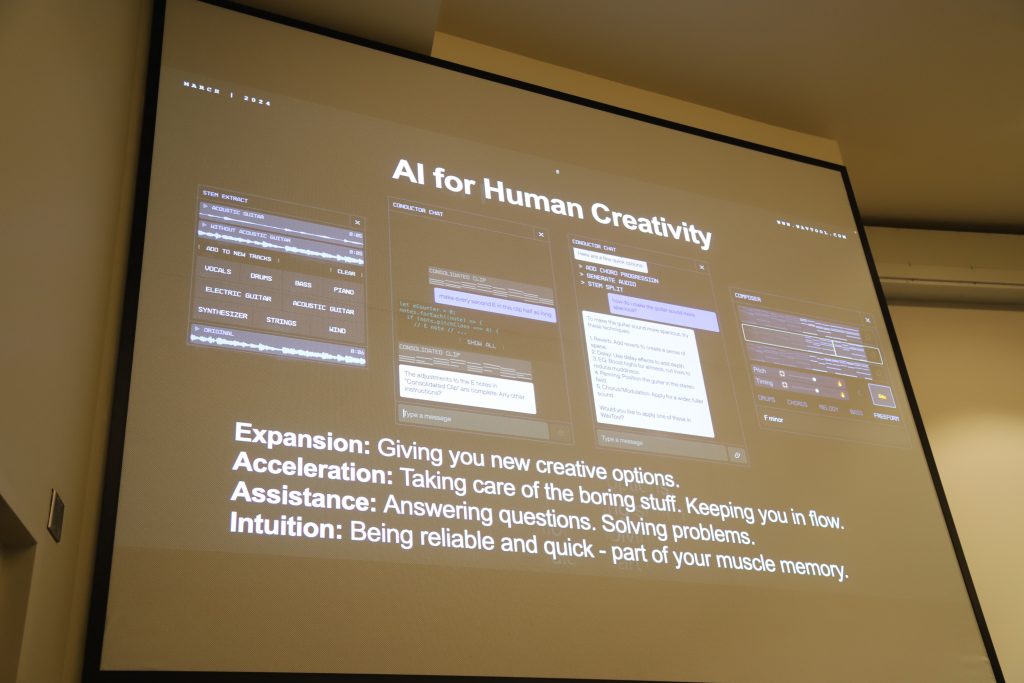
Buried within the technical questions is the most looming one of all. What makes art, art? If we want to protect human creativity, we are forced to put a definition on what art really is and what art is worth saving.
“You see that poster behind you? That community market poster,” Meitus says, gesturing to an example in the room. “Would you say that art is the same as something hanging in the museum? It might be art, but it’s commercial art.”
He explains that creative work often falls along a continuum. On one end are practical or commercial uses of creativity: posters, advertisements, graphic design, and marketing materials. On the other end are works created from the compulsion to make art: a painting in a museum, a novel, or a song written by a musician.
“You’d look at something like a Van Gogh or a song by Bon Iver or Mumford and Sons and say that’s the highest form of creative art,” he says. “It’s art for art’s sake.”
Artificial intelligence now enters and disrupts that continuum. In some cases, it can generate functional or commercial outputs quickly and cheaply that might once have required a human creator. Those uses raise questions not just about copyright, but about labor and economics.
But as the conversation moves further along that artistic spectrum, the stakes change. When AI begins generating songs, literature, or visual art modeled after human creators, the debate shifts from economics to culture.
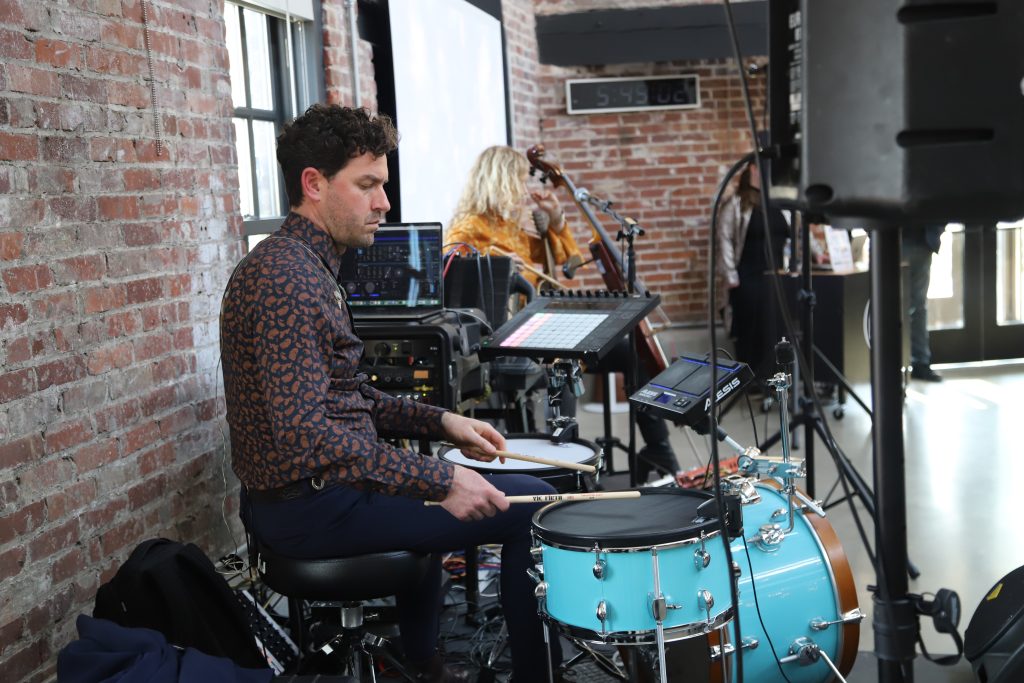
For many creators, the rise of AI tools can feel both empowering and threatening. On one hand, the technology dramatically lowers the barriers to entry. Tools that once required expensive equipment, training, or years of practice are becoming widely accessible. But that accessibility can also feel like a disruption to the value of creative labor.
“You spend your whole life investing in this art form,” Behforouz says. “And then one tool comes along that completely displaces the 10,000 hours of work you did, you’d be a little pissed.”
At the same time, democratization has always been part of technological change in the arts. Recording software, digital cameras, and social media all expanded who could participate in creative industries.
AI may simply be the next step in that evolution. As artists, lawmakers, and industry leaders continue to wrestle with these questions, the answers remain far from settled. Conversations around copyright, compensation, and creative ownership are still unfolding in real time, with few clear precedents to follow.
Those conversations will continue at AlgoRhythms, an upcoming summit hosted by Indiana University’s Kelley School of Business and Jacobs School of Music, where Meitus and Behforouz will join others exploring the intersection of artificial intelligence and music.
For now, we have to ask ourselves: what happens to creativity when its value is no longer human?

